 land
land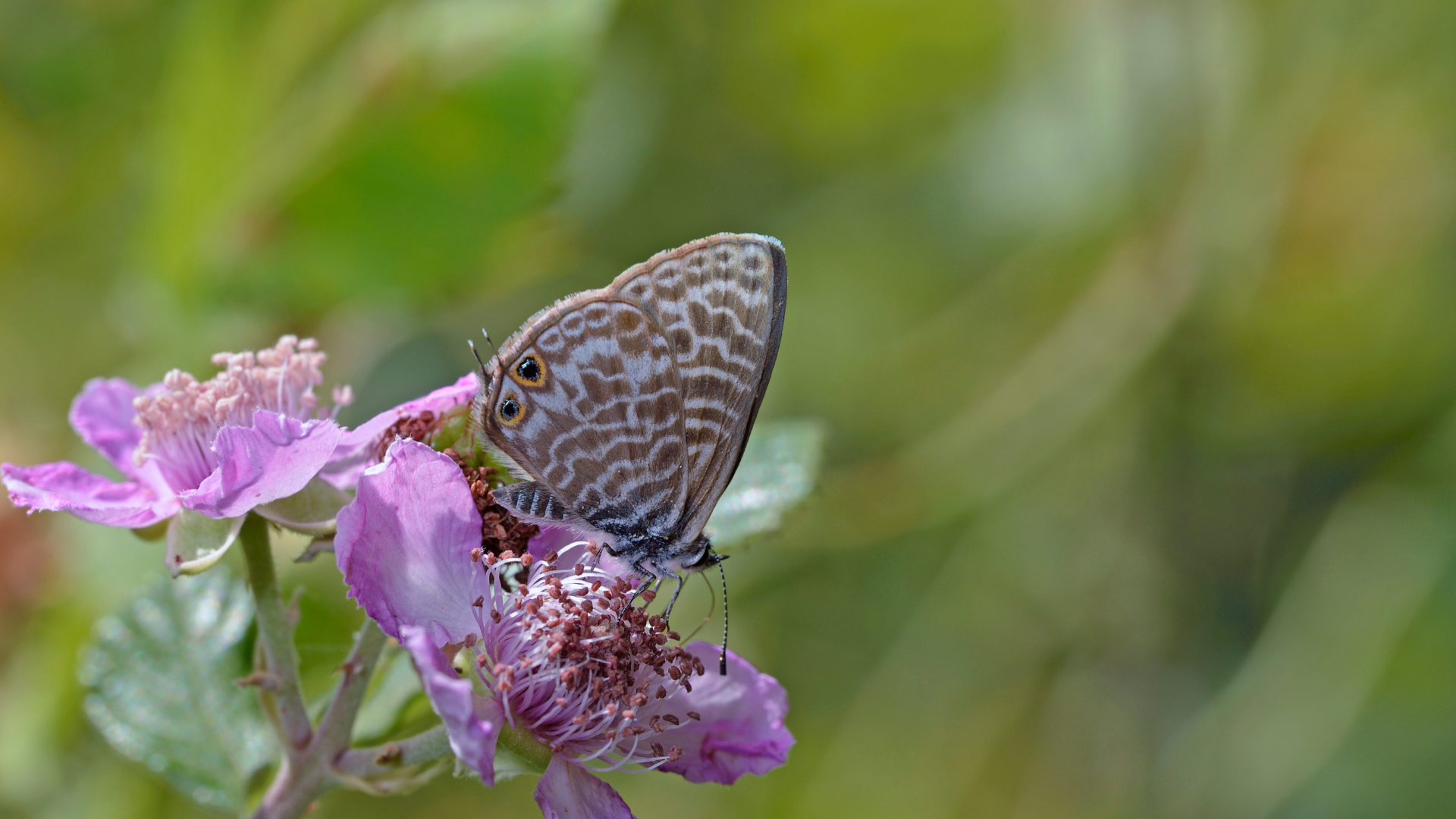
Cyprus’s tiny striped wonder: The story of Leptotes pirithous cypriensis
As spring warmth spreads across the Cypriot countryside, one of the island’s smallest butterflies begins to appear among low shrubs and wildflowers. Leptotes pirithous cypriensis, the Cypriot subspecies of the Lang’s Short-tailed Blue, flutters delicately through coastal scrub, rocky hillsides, and open countryside. Though tiny and easily overlooked, its finely patterned wings add subtle movement and detail to the Mediterranean landscape.
This butterfly belongs to the species Leptotes pirithous, a small member of the Lycaenidae family found across southern Europe, Africa, and parts of Asia. Despite the name “blue,” it does not usually appear bright blue in the wild. Males may show a faint bluish-violet sheen on the upper wings in certain light, but more often both males and females appear greyish-brown. When resting with wings closed — as it frequently does — the underside reveals delicate white stripes across a beige-brown background, along with small orange and black eye-spots near the tail, helping it blend into dry grasses and rocky terrain.
In Cyprus, cypriensis has adapted well to the island’s long, hot summers and mild winters. It is commonly found in open habitats rich in legumes, particularly broom and other pea-family plants, where females lay their eggs and caterpillars feed. Thanks to the favourable climate, the species can produce several generations each year and may be seen from early spring well into autumn, quietly thriving in pockets of natural scrubland.
Though resilient, this small butterfly depends on healthy habitats. Urban expansion, land-use changes, and the loss of native vegetation can reduce the availability of essential host plants. Protecting wild, flower-rich areas ensures that Leptotes pirithous cypriensis continues to grace Cyprus’s landscapes — a subtle yet meaningful symbol of the island’s rich and delicate biodiversity.